Guide · Kimi Code
Run Kimi Code from your phone
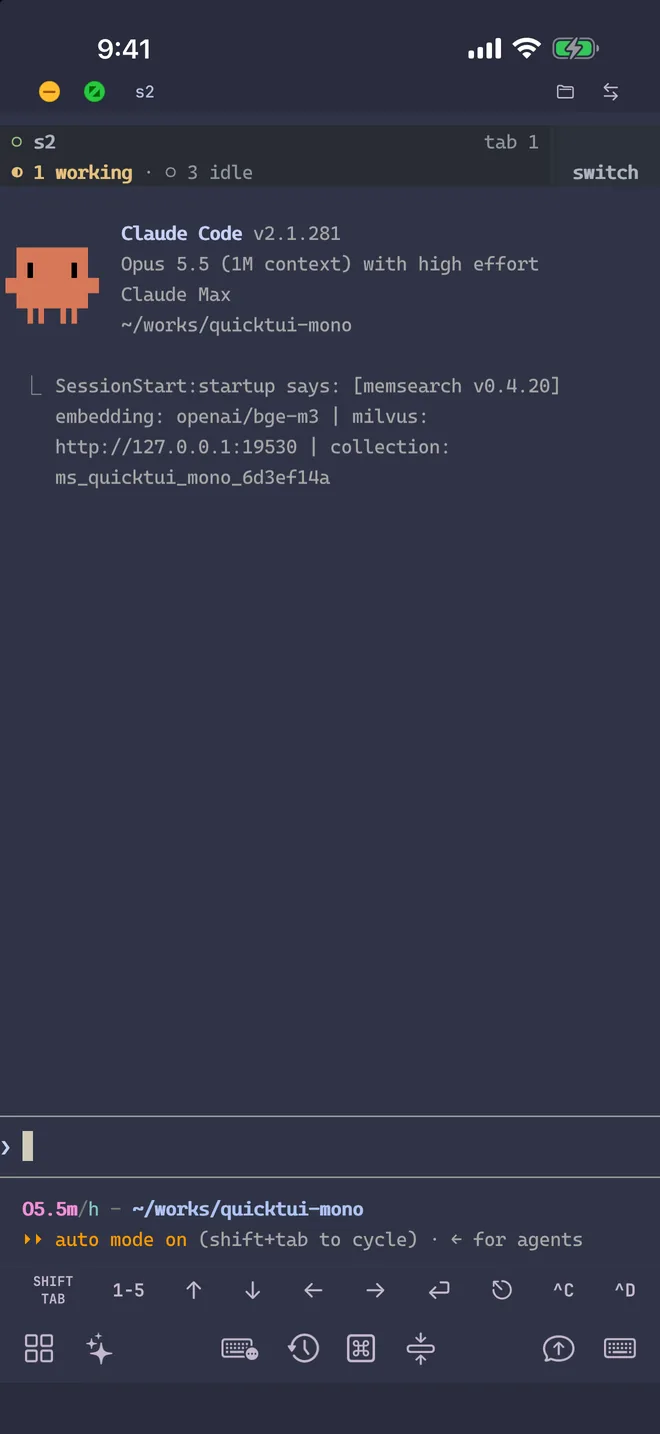
Kimi Code runs in a terminal on your computer, so you can drive it from your phone. Run it in a tmux or Herdr session and QuickTUI opens that live session on iPhone, iPad or Android, end-to-end encrypted. Kimi Code keeps running when you put the phone down.
What is Kimi Code?
Kimi Code is Moonshot AI's coding agent for the terminal. It's open source (MIT), and you start it with the kimi command. It replaces the earlier Python-based Kimi CLI (MoonshotAI/kimi-cli), which is now archived; if you're looking for Kimi CLI, Kimi Code is its successor.
Set up Kimi Code and QuickTUI
- Install Kimi Code on the computer where it should run:
Then run# macOS / Linux curl -fsSL https://code.kimi.com/kimi-code/install.sh | bash # Homebrew brew install kimi-code # npm (Node.js 22.19 or later) npm install -g @moonshot-ai/kimi-code # Windows (PowerShell, requires Git for Windows) irm https://code.kimi.com/kimi-code/install.ps1 | iexkimiand sign in with/login, using Kimi Code's device-code sign-in or a Kimi Platform API key (KIMI_API_KEY). Accounts outside mainland China usekimi login --region global. See the Kimi Code docs for details. - Install QuickTUI on your phone: from the App Store for iPhone and iPad, or the Android app (Preview).
- In the app's setup wizard, choose Connect Over SSH — Enable Enhanced Features (Recommended), enter the computer's SSH login and tap Install. The app installs the QuickTUI server and pairs automatically. If the computer has neither tmux nor Herdr, it installs Herdr.
On Windows, or on a computer without SSH access, run the install command on the computer, then pair by scanning a QR code:
# macOS / Linux
curl -fsSL https://quicktui.ai/q.sh | sh -s -- install --channel server2

# Windows (PowerShell)
& ([scriptblock]::Create((irm https://quicktui.ai/q.ps1))) install --channel server2
The connection between your phone and your computer is end-to-end encrypted and direct by default. See the install guide for details.
Start Kimi Code from your phone
Open the Agent Wizard in the app, choose Kimi, and QuickTUI starts it in a new window of the current tmux session or a new tab of the current Herdr workspace. The wizard isn't available on the Luvus backend.
- Mode
- Default keeps Kimi Code's normal approval prompts. YOLO adds
--yolo, so it runs without asking; use it only in a repository you're prepared to let it change. - Model
k3-256k,kimi-for-coding-highspeed,k3orkimi-for-coding, passed with--model. Add your own under Settings > Agent Models.- Resume
- Continue an earlier session with
--session. Resume isn't available when the workspace runs on Herdr. - Working directory
- Pick the project folder, with recently used folders one tap away. Save frequent combinations as presets.
You can also start it yourself on the computer, in a named tmux session you can find later in the app:
tmux new-session -s kimi
kimi
Tips for Kimi Code on a phone
- Send screenshots
- Attach a file, image or camera photo from the Input Bar. It's uploaded to your computer (up to 10 MiB) and its path is inserted, so Kimi Code can read it.
- Common commands in one tap
- The command palette includes a Kimi group with its frequently used commands, so you don't have to type them on a phone keyboard.
- See which session needs you
- With Herdr, the Session Manager shows whether each Kimi Code session is idle, working, waiting for input or done.
Kimi Code remote control vs QuickTUI
Kimi Code has its own remote control: kimi rc (or kimi web --remote-control) shows a QR code and a link that open the session in a browser through Kimi's relay. It requires a paid Kimi membership.
QuickTUI takes a different approach. It gives you the full terminal on your computer rather than a browser view of one session, so you can run Kimi Code next to Claude Code, Codex or any other CLI agent and switch between them in one app. The connection is end-to-end encrypted and direct by default, and sessions live in tmux or Herdr, so they survive app restarts and network changes. Both keep Kimi Code running on your own computer; pick the one that fits how you work.
FAQ
Is Kimi Code the same as Kimi CLI?
Kimi Code is the successor. Moonshot AI archived the Python-based Kimi CLI and replaced it with Kimi Code, which you still start with the kimi command.
Does Kimi Code keep running when I close the app?
Yes. It runs in a tmux or Herdr session on your computer and keeps working after you close the app or lose signal. Reopening the app takes you back to the live session.
Do I need a Kimi membership to use it with QuickTUI?
QuickTUI doesn't require one. You need whatever Kimi Code itself needs to run, either a Kimi Code sign-in or a Kimi Platform API key. Kimi's own kimi rc remote control is the feature that requires a paid membership.
Can I use QuickTUI with Kimi Code on Android?
Yes. The Android app is in preview and works with the same QuickTUI server as the iPhone and iPad app.